
Wasps · Nests
How to find a wasp nest
Lots of wasps, but no sign of where they come from? Here is how to track a nest down, the places it usually hides, and what to do once you have found it.
By Derek · Updated · 4 min read
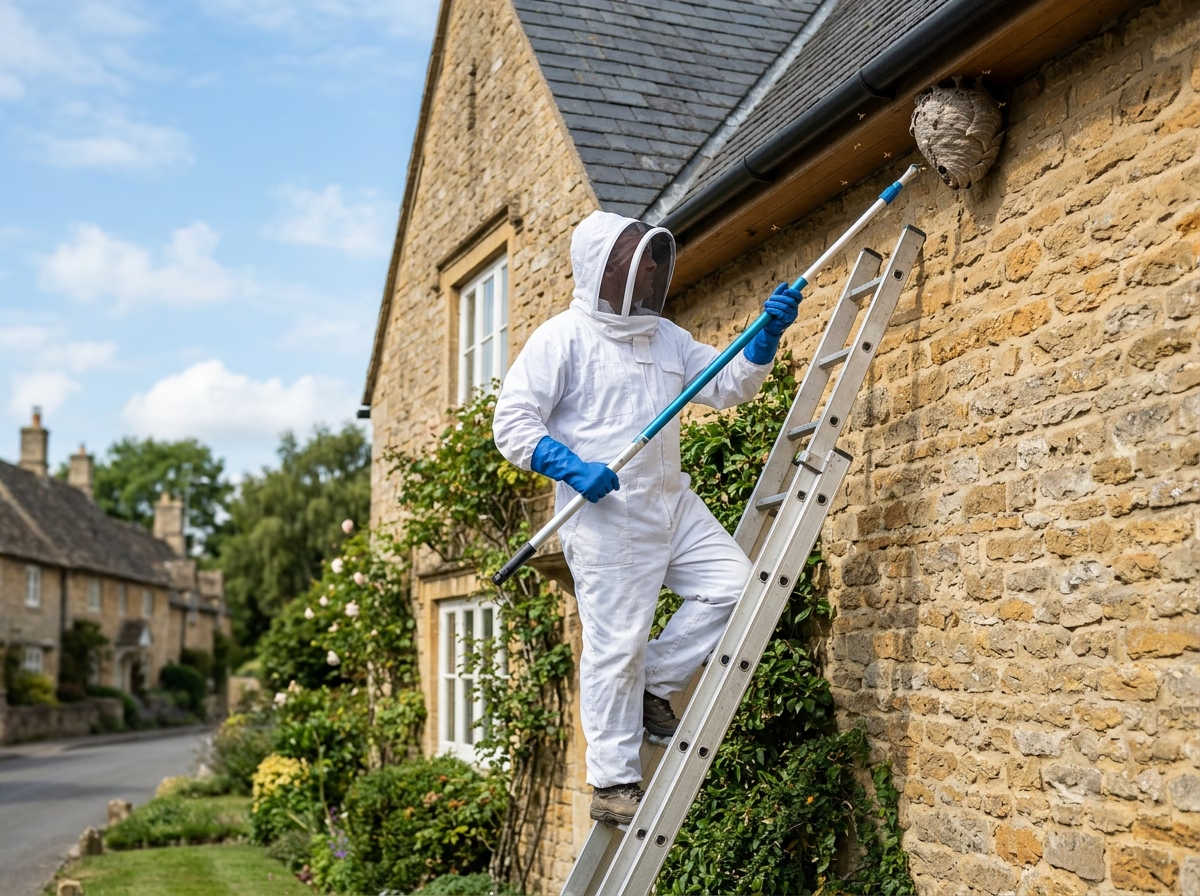
The quickest way to find a wasp nest is to watch the wasps. Pick a sunny spot, keep a safe distance, and see where they fly in and out. A steady stream of wasps going to and from one hole or gap almost always points to the nest.
Signs there is a wasp nest nearby
- Wasps repeatedly flying in and out of the same hole in the ground, a wall, the roof, a tree or a bush.
- A steady line of wasps travelling in the same direction, rather than drifting about at random.
- A papery, brown or grey structure, often heart-shaped with a wider top.
- Wasps appearing inside the house through a loft, attic or dormer window.
Nest activity is typically from May to November, so late summer is when most people start asking where all the wasps are coming from.
Where wasp nests hide around the house and garden
Wasps choose sheltered, quiet places. In Oxfordshire homes, from Cotswold stone cottages to modern estates, these are the spots worth checking:
Roofs, lofts and dormer windows
Nests are often built in lofts, attics and dormers, where the entrance may be a small gap under the eaves or in the roof line. Look up from outside and watch the roof edge rather than searching inside.
Walls, sheds and outbuildings
A gap in brickwork or stone, a hole in a shed wall or the underside of a garage roof can all hold a nest.
The ground, trees and bushes
Wasps flying into a hole in a bank or lawn suggest an underground nest. Nests are also found hanging in trees and shrubs, where leaves can hide them until late in the season.
A simple way to track the nest
- Watch from a distance. Choose a warm, dry part of the day when wasps are busy.
- Follow the flight line. Note which direction they arrive from and leave to.
- Look for the entrance. It is usually a small hole or gap with wasps entering and leaving.
- Make a note of where it is. Height, which wall or part of the garden, and roughly how busy it is. This helps when you phone for advice.
Keep your distance and do not block the entrance or poke the nest. Disturbed wasps are far more likely to sting.
Can't find it? Don't want to look?
You do not have to find the nest yourself. Tell us where you have seen the wasps, how many there are and how long they have been around, and we will help work out where the nest is. Telephone advice is always free.
Once a nest is found, we can normally attend and treat it within 24 hours, and usually the same day. Nests in lofts, attics or dormer windows are generally treated with a dry powder from outside the building, and a chemical-free freezing alternative is available. Successful wasp nest treatment is guaranteed. You do not necessarily need to be at home, as long as we have access to the grounds below the nest.
We are a small, family-run business near Witney, covering Oxfordshire and the surrounding Cotswold border areas including Witney, Oxford, Burford, Woodstock, Bicester and Banbury. Full details of the treatment are on our wasp nest removal page.
Quick answers
When are wasp nests most active?
Typically from May to November.
What does a wasp nest look like?
Papery and brown or grey, often heart-shaped with a wider top.
Do I need to be at home for treatment?
Not necessarily, as long as we have access to the grounds below the nest.

Wasps at your property? Let's deal with the nest.
Describe where you have seen them and we will advise. Wasp nests are normally treated within 24 hours, usually the same day.
- Successful wasp nest treatment guaranteed
- £5 million public and products liability insurance; £10 million employers liability insurance